
Research and Report by Kelly Davis, Director of Research, OIA & CCSAA
The U.S. outdoor recreation consumer base is large and dynamic with 181 million participants, about 59% of Americans and twenty-two million new participants in just the past four years. During that time, the typical outdoor participant has changed, they participate less frequently, their approaches to outdoor activities are less aggressive, and they spend less per consumer. The core outdoor consumer of the past is not the dominant force in the outdoor market today. The influx of millions of new, more casual consumers during and after the pandemic have transformed the Outdoor market. Cross country skiing gained about a million total participants between 2020 and 2024 and beginning cross country skier (first season) look a little different than the old cross country participants base and they participate less frequently on average.
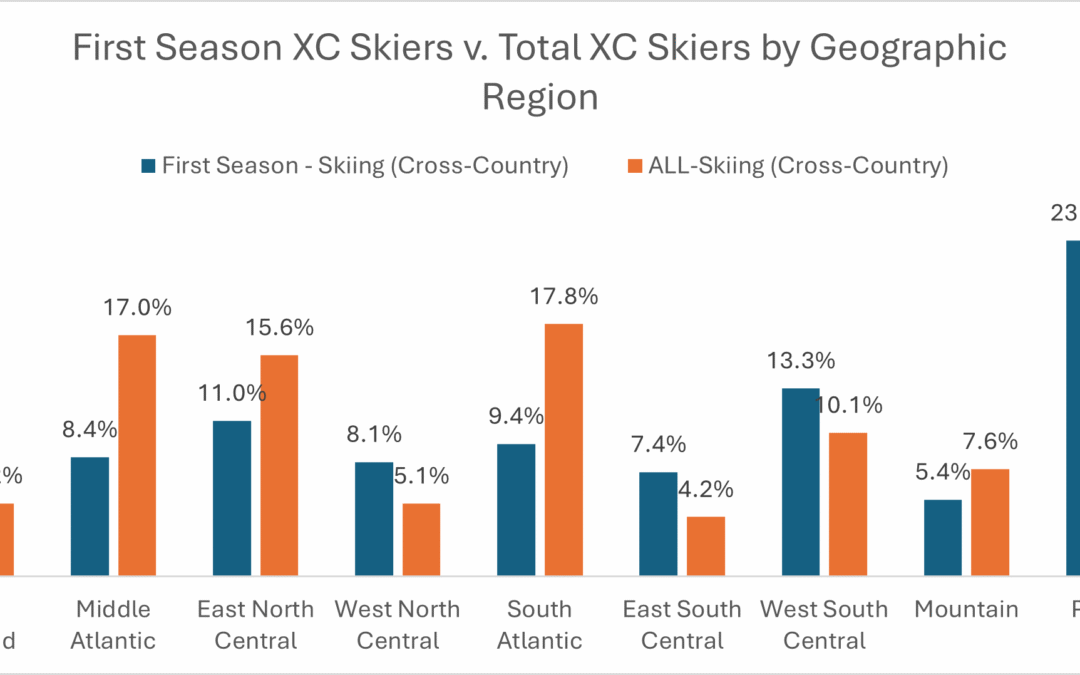
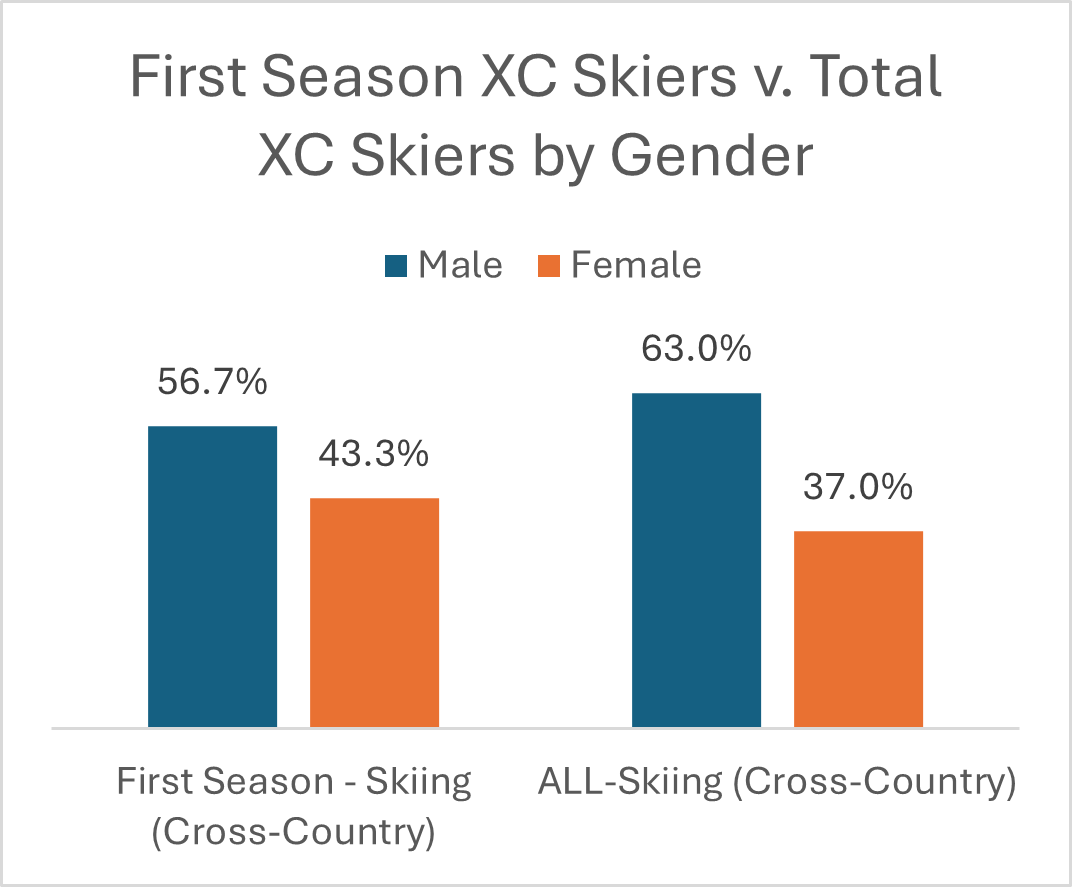
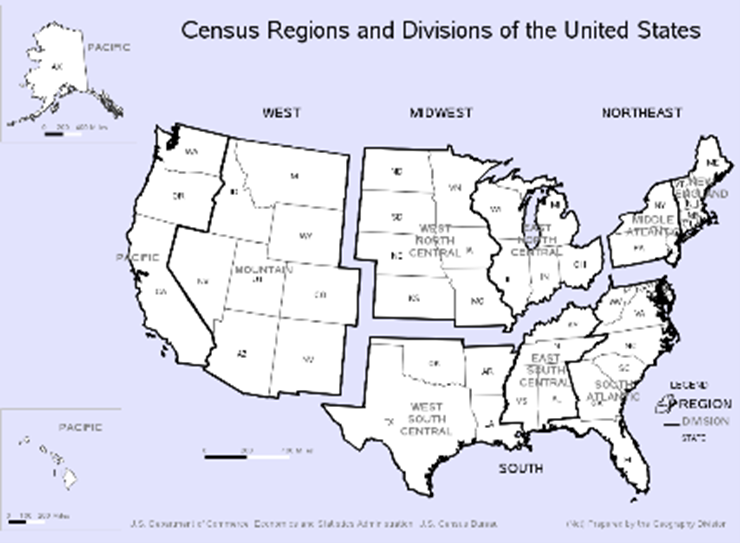
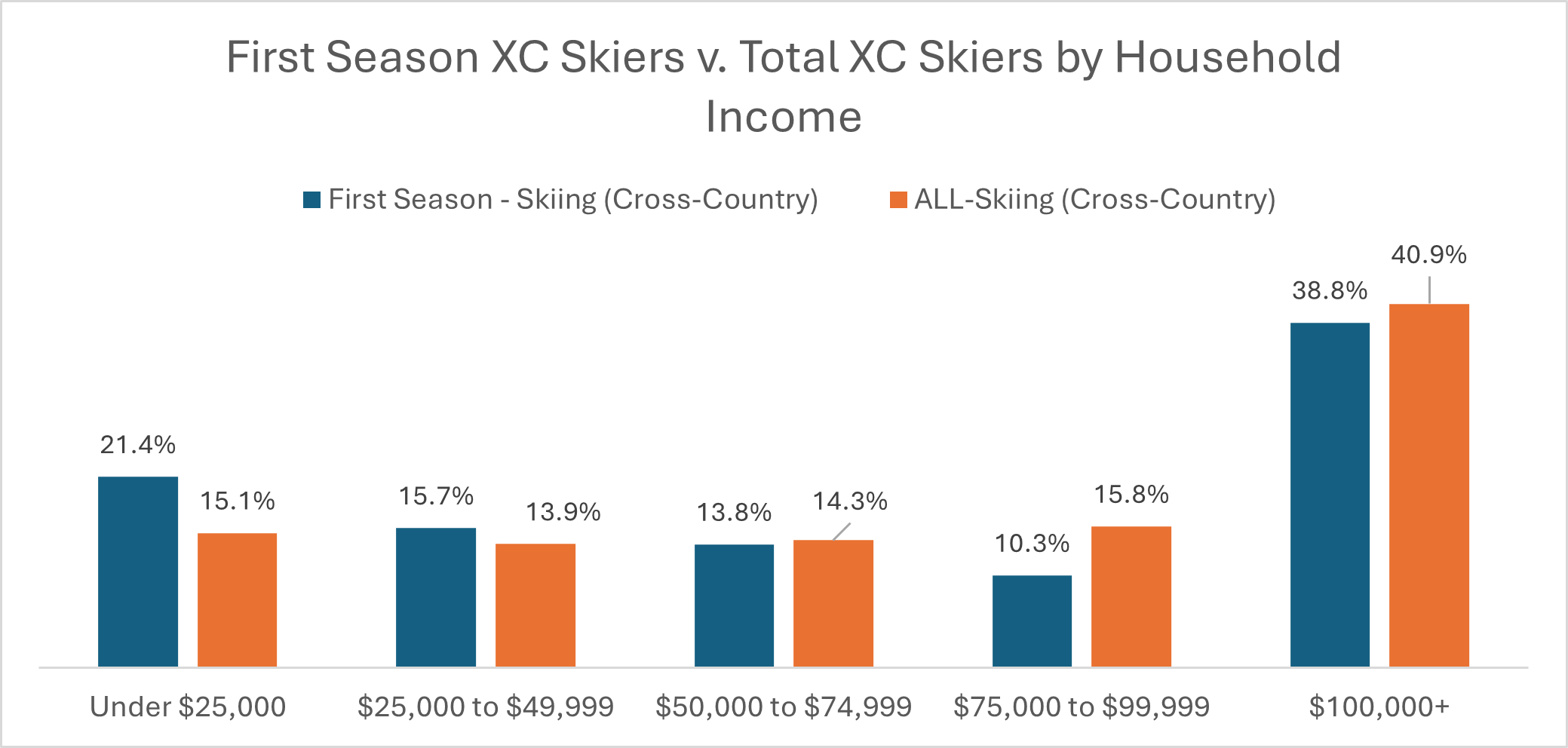
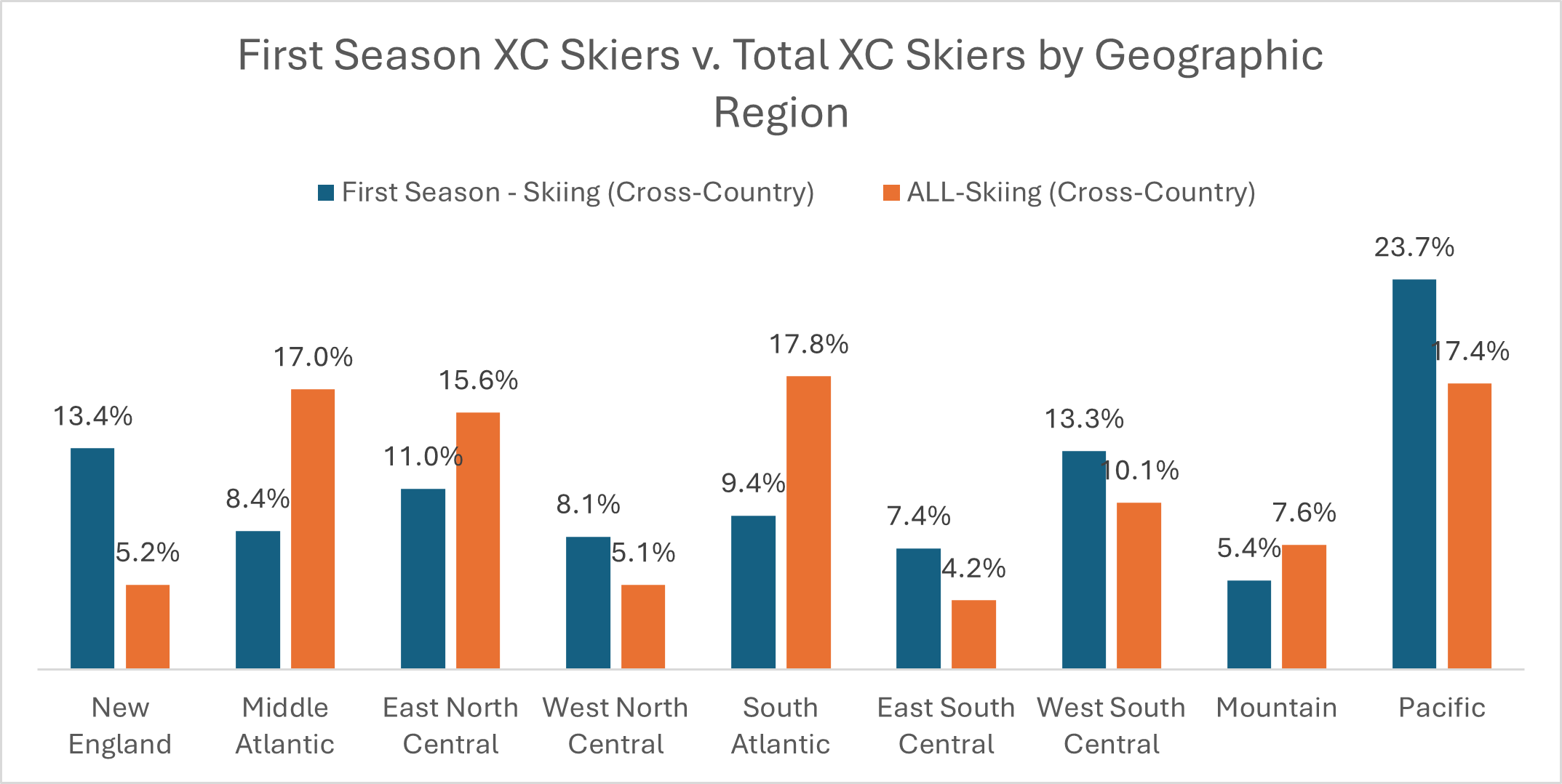
In the group of first season (new) cross country skiing participants, there are more women, more participants from lower income groups, and more first season cross country skiers are coming from New England, the West North Central, and the Pacific regions where cross country skiing is more popular and more accessible.
Core and Casual
In the past, frequency of participation was the one-dimensional metric used to define “core” and “causal” participants. If a participant ran 51 times or more a year, cross country skied 8 times or more, or hiked 13 times or more, they were considered “core” participants. The outdoor industry aimed marketing, designed products, and centered the image of the “core participant” as the archetype all participants assumed to aspire to outdoors. Using only this frequency definition, 30% of participants in any outdoor recreation activity participate frequently enough to be defined as “core.” That is true of cross-country skiing too where the percentage or “core” skiers is trending down at about 30% of the participant base. That means that 2/3 of cross-country participants are skiing fewer than 8 days a season. In fact, very few first-season skiers hit the trails fewer than 8 times last season and that presents an opportunity to increase the number of days they have on trail in the coming season.
One way to boost participation is by building relationships with participants and that means engaging them on their terms. In order to better understand outdoor consumers, the Outdoor Industry Association recently segmented the Outdoor Recreation consumer base, and the insights apply to cross-country skiers.
Obviously, defining a core, moderate, or casual outdoor participant ideally should be about more than just the frequency of participation in outdoor activities. Where a consumer fits on a scale from core to casual as an outdoor consumer is also about the qualitative intensity of a participant’s approach to outdoor activity – is it highly intense and aggressive or mild and peaceful? We included affect, or the outcomes consumers are chasing in our definitions – are they chasing – happiness? Excitement? Balance? Calm? Confidence? Finally, we correlated spending in our illustrations of core, moderate, and casual outdoor consumers. This view of casual, moderate, and core consumers is a multidimensional look at today’s outdoor consumer.
What Makes a Person a “Core” or “Casual” Outdoor Consumer?
Today’s typical Outdoor consumer participates in Outdoor activities casually; they only get out occasionally, their approach is mild, not aggressive, and they are doing it to feel happy, calm, and balanced. This is a big switch from the antiquated archetype of “core” participants like “thru” hikers, expert mountaineers, giant gap jumping mountain bikers, or snowboard heroes hucking themselves off cliffs. Keep in mind, the core outdoor consumer isn’t gone; about 5% of participants fall into core based on their participation frequency, intense approach to outdoor activities, and high spending in the outdoor market. The core participants’ more intense, aggressive approach to outdoor activity, and their quest for excitement is not the dominant approach, or the desired outcome for most outdoor consumers.
OIA worked with experts at CivicScience to develop questions that best described various qualitative approaches that could correlate with low and high frequency participation, affect (e.g. happy to sad), and spend on outdoor products. The result was a nine-level scale including a category for non-participants (they had to purchase outdoor gear and/or apparel to be included) that runs from the most qualitatively casual description of an approach to Outdoor activity (“Super Casual”) to the most aggressive approach (“Super Core”).
Learn about nine outdoor consumer segments that OIA identified from their analysis of more than 6,000 outdoor consumers.
View Report on casual, active, and core outdoor recreation consumers’ retail behavior including spending, customer journey, product features preferences, and spend by activity (including snow sports)
If you are interested in a more in deapth discussion, please contact Reese to schedule a Zoom with Reese and Kelly.